
AI, Symptom Searching, and the Growing Importance of Trusted Health Information
As more of the general public turn to AI to interpret symptoms, the risk of misreading early warning signs grows—making trusted healthcare information vital in guiding timely conversations with clinicians.
AI is advancing medicine and healthcare in genuinely transformative ways. From accelerating drug discovery and enhancing diagnostic imaging to streamlining administration and enabling predictive care, it is supporting clinicians and strengthening patient outcomes. In Ireland, the HSE’s National AI for Healthcare Strategy reflects this potential, focusing on how these tools can enhance services while supporting clinical decision-making.
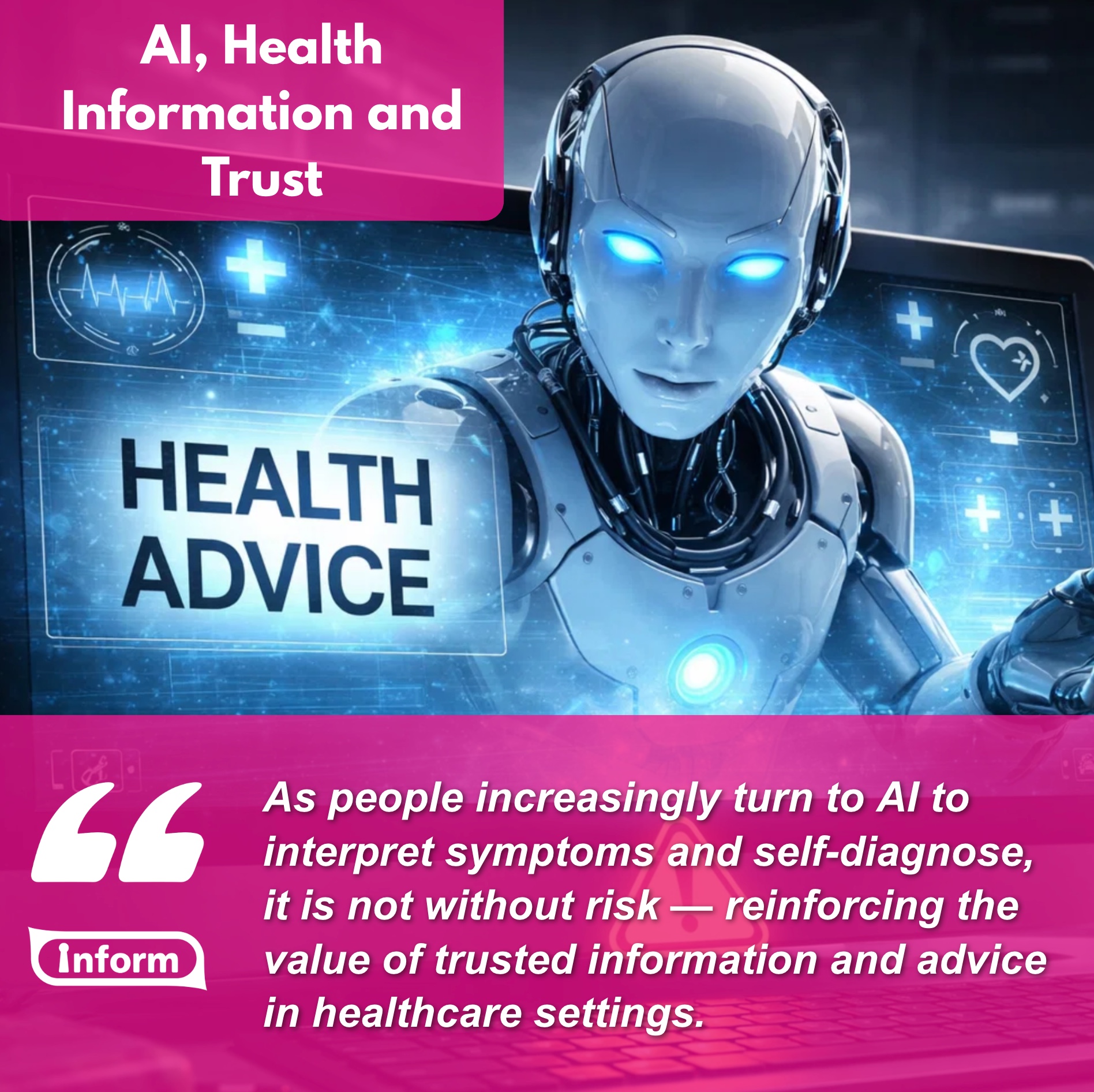
At the same time, AI is increasingly being used by the general public to interpret symptoms and seek reassurance—sometimes in place of consulting a healthcare professional. Unlike traditional search, which presents multiple sources, AI delivers direct, synthesised responses that can feel clear, immediate, and authoritative.
When AI reassurance leads to the wrong decision
This shift has important implications. AI responses are generated without access to a patient’s full clinical picture, yet they are often interpreted as personalised guidance. Research shows that digital symptom tools can vary significantly in both diagnostic accuracy and triage advice. The issue is not simply incorrect information, but misplaced certainty.
The impact is behavioural. Some delay seeking care when it is needed, reassured by an answer that feels plausible. Others attend services driven by uncertainty or panic, when reassurance or self-care would have been appropriate. In both directions, the balance of appropriate care begins to shift.
This effect can be more pronounced among those already less inclined to engage with healthcare—people who are reluctant to present, uncomfortable discussing symptoms, or managing stress or mental health challenges. For these individuals, AI can become a substitute rather than a prompt, reinforcing delay rather than encouraging action.
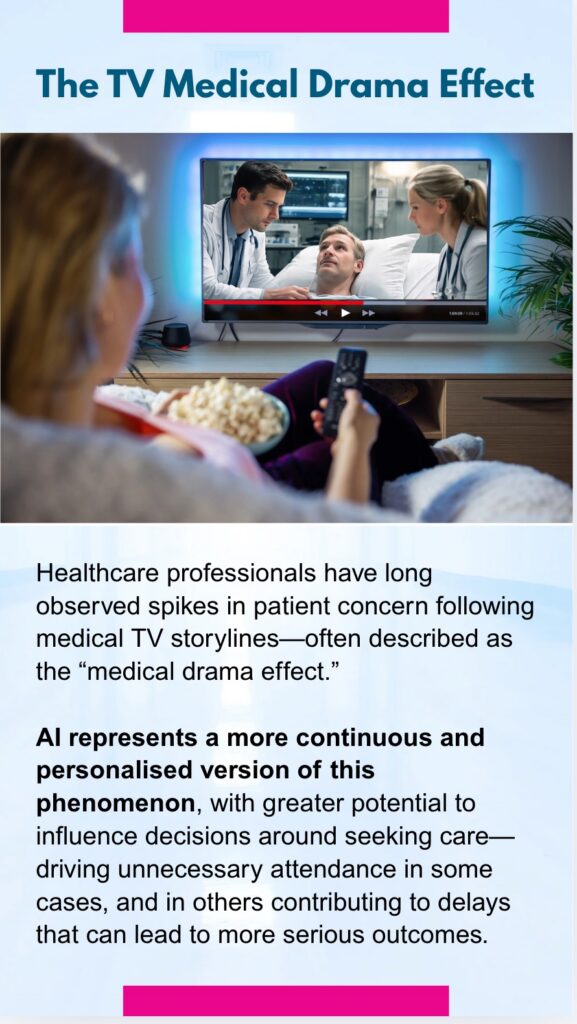
The consequences are real. Early warning signs can be overlooked or misread. A person experiencing chest discomfort may accept an explanation that downplays risk. Someone with persistent fatigue may not recognise the need for investigation. In more serious cases, delay can allow conditions to progress to the point where emergency care is required—where earlier intervention could have led to a very different outcome.
The Waiting Room before consultation matters
GP and Healthcare waiting rooms offer a rare moment where attention is focused and health is already top of mind. It is one of the few settings where clear information can be absorbed without distraction.
INFORM’s digital screens, brochure displays, and posters support communication in this space in a clear and structured way—presenting prevention campaigns, healthy living guidance, awareness initiatives, condition-management information, and key practice updates so they can be easily seen and understood.
In many settings, information can become layered—overlapping notices, unsuitable formats, and messages of varying importance presented side by side. Without clear structure, key information can be harder to distinguish and less likely to be absorbed.
When communication is clear, its impact extends beyond the room. Information seen here is often shared—within households and across communities—reaching those who may not attend at all.
Crucially, this is also where messaging meets those who have already interpreted symptoms through AI—whether that has led to delay, doubt, or unnecessary concern. In that brief window, the right message can counter false reassurance, steady panic, and prompt timely discussion with a healthcare professional.
Not everyone will present when they should. But those who do become a point of influence—supporting their own decisions and encouraging others to act—helping reduce delayed presentation and unnecessary escalation to emergency care.